
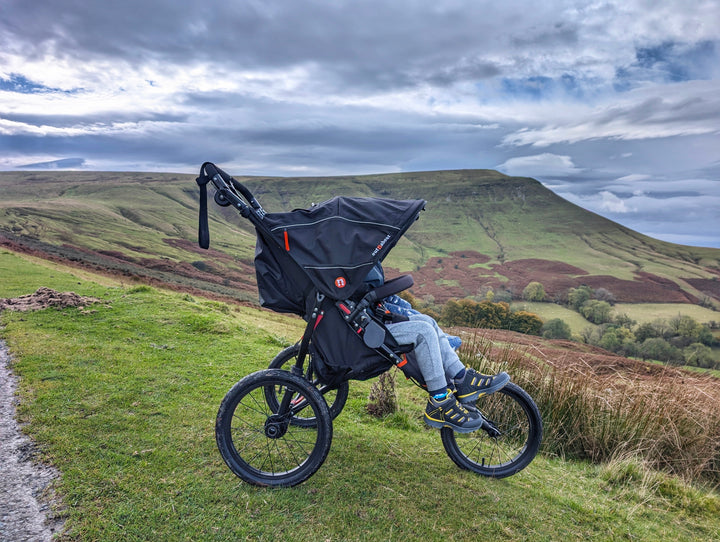



Is There a Baby Carrier That Doesn’t Hurt Your Back on Long Walks?
Hiking with a baby or toddler on your back should feel like freedom, not a physio appointment waiting to happen.
You set off feeling ready for fresh air and family time. You finish adjusting your shoulders and stretching your lower back. If that sounds familiar, you are not alone. Back pain from a baby carrier during long walks is common, but it doesn't have to be.
In most cases, the problem isn't your fitness or your child’s weight. It is how the baby carrier is designed, and more importantly, how it fits your body.
In this guide, we will break down why some baby carriers cause back pain on long walks, what actually makes a difference to comfort, and how to choose a hiking child carrier that works with you, not against you.
The truth about baby carriers and back pain on long walks
Not all baby carriers are hard on your back. The difference usually comes down to one simple principle: how the weight is distributed.
On longer walks, your hips are designed to carry the load. Your shoulders are not. When a carrier includes a supportive hip belt and is fitted correctly, most of the weight should transfer through your pelvis, with the shoulder straps helping to stabilise rather than hold everything up.
Consumer guidance on framed backpack carriers emphasizes that the majority of the weight should be carried on the hips, not the shoulders.
Ergonomics research on load carriage also shows that using a hip belt reduces pressure on the shoulders and shifts it to the hips and waist.
On a ten-minute stroll, poor load transfer might be tolerable. On a 90-minute countryside walk, it catches up with you quickly. That is where design and fit start to matter.
Why your baby carrier might be causing back pain on long walks
Back pain on longer walks rarely means you are not strong enough. More often, it comes down to setup.
The most common issue is shoulder‑dominant carrying. If your shoulders feel like they are holding most of the weight, your hip belt is either too loose, sitting too low, or not designed to properly distribute the load.
Torso length is another big factor. If the back panel is too long or too short for your frame, the carrier will pull you backwards slightly. Over time, that small shift changes your posture, and your lower back starts working harder than it should.
Your child’s position also matters. If they sit too far from your centre of gravity, even by a few centimetres, the leverage increases. That is when a walk that felt fine for the first twenty minutes suddenly feels heavy.
Then there is simple fatigue. As you tire, your posture softens. When posture softens, the load no longer transfers cleanly through your hips.
The good news is that most of this is fixable. Small adjustments often make a big difference. But if your carrier cannot adjust properly or transfer weight effectively, it may be worth considering a more supportive design.
What to look for in a baby carrier for long walks and hikes
If you are choosing a baby carrier specifically for longer walks, design matters more than brand names.
Start with a properly padded hip belt. This is what allows weight to transfer through your hips rather than hanging from your shoulders. Without a supportive waist belt, even a light load will feel heavier over time.
Next, check torso adjustability. A hiking child carrier should adjust to your frame, not force you to adapt to it. If the back length cannot be dialled in properly, you will struggle to get the hip belt sitting where it should.
Supportive shoulder straps and load lifters help fine-tune balance. They should stabilise the carrier, not act as the main weight-bearing point.
A ventilated back panel makes a bigger difference than many parents expect. Overheating leads to fatigue, and fatigue leads to poor posture.
Look at the child seat itself, too. It should feel secure, well supported, and appropriate for your child’s age and weight. Framed backpack carriers are generally designed for babies who can sit unaided, often from around 6 months, with maximum loads typically up to 18 kg.
Finally, think practically. Built-in storage, a sunshade, and a rain cover mean you don't have to juggle extra bags on longer days out.
How to fit a child carrier backpack properly
Even the best-designed baby carrier will feel uncomfortable if it is not fitted properly.
Use this quick fit check every time, especially if more than one adult wears the carrier.
- Start with the hip belt. Position it so it sits over your hip bones, not around your waist. Tighten it firmly. You should feel the load settle through your pelvis.
- Set the shoulder straps. Tighten until they sit comfortably and remove slack, but do not crank them down. They should stabilise the carrier, not carry it.
- Clip and adjust the chest strap. Keep it comfortable and supportive. It should stop the straps from drifting, not squeezing.
- Fine-tune with the load lifters. If your carrier has them, adjust so the pack sits closer to your back. This helps reduce that pulled-backwards feeling.
- Check your child’s position. Make sure they are secure, centred, and sitting comfortably. Confirm all buckles and straps are fastened correctly.
-
Do a ten-minute test walk around the block, then tweak. Small changes early on prevent aches later.

Sling vs backpack carrier: what works for long walks and hikes
Choosing between a sling or soft carrier and a framed backpack carrier comes down to your baby’s age, the distance you plan to walk, and the type of terrain.
Framed backpack carriers are typically used once a baby can sit upright independently, usually from around 6 months, and are tested to EN 13209 safety standards.
If your baby cannot sit unaided with strong head control, a framed hiking carrier is usually not the right option yet.
For younger babies, a sling or soft-structured carrier is typically more appropriate, especially for shorter walks and everyday outings. A product like the Carifit baby carrier keeps your baby close to your centre of gravity, which can feel more natural in the early months. When using any carrier with a newborn, follow recognised safety guidance such as the T.I.C.K.S. principles.
As your child grows and walks get longer, the difference becomes clearer. Backpack carriers are built for uneven terrain, heavier loads, and extended time on your feet. With a structured frame and supportive hip belt, they distribute weight more effectively over longer countryside days.
In simple terms, slings and soft carriers work well for the early months and shorter routes. Backpack carriers come into their own once your child is older, heavier, and ready for longer walks.
Why we built the Out ’n’ About Nipper Trek for family adventures
When we designed the Nipper Trek, the goal was simple: make longer family walks feel manageable, not exhausting.

The Nipper Trek carrier built for practical family adventures.

Lightweight and fold-flat for simple storage at home or in the car.
We focused first on weight. At 2.5 kg, the Trek feels lighter from the moment you lift it. When you are already carrying a growing child, snacks, water, and layers, every kilogram matters.
Next came fit. An adjustable torso and padded hip belt allow the load to transfer properly through your hips, rather than hanging from your shoulders. The ventilated mesh back system helps reduce heat buildup on longer countryside walks.
For your child, there is a secure seat with a safety harness and a soft, removable drool pad for comfort on longer days out. A fun rope handle for older siblings and a rear-view mirror for quick check-ins add thoughtful family details.
We also looked at real-world practicality. The Trek folds flat for travel and storage, making it easier to pack into a car boot or take away on holiday. Built-in storage means you don't have to juggle an extra backpack.
And because British weather rarely sticks to the plan, a removable UPF sunshade and rain cover are included as standard.

Weather-ready design to help keep little ones protected outdoors.

Keep little ones in sight and siblings close on every walk.
It is designed for babies who can sit unaided from 6 months, up to a maximum child weight of 18 kg, in line with EN 13209 standards.
Comparing popular hiking child carriers
Swipe left to see full specs →
| Carrier Model | Weight | Ventilation Type | Torso Adjustment | Folds Flat | Folded Size | Sunshade | Rain Cover |
|---|---|---|---|---|---|---|---|
| Out ’n’ About Nipper Trek | 2.5 kg | AirMesh (Padded) | 38 – 53 cm | Yes | 65.5 x 32 x 14.5 cm | Yes, UPF 50 (Removable) | Yes |
| Osprey Poco | 3.45 kg | Suspended Mesh | 38 – 53 cm | No | 78 x 38 x 20 cm | Yes, UPF 50+ (Built-in) | Yes (UK version) |
| Deuter Kid Comfort | 3.23 kg | Suspended Mesh | 44 – 58 cm | No | 72 x 43 x 22.8 cm | Yes, UPF 50 (Removable) | No (Accessory) |
| Thule Sapling | 3.8 kg | Ventilated Padded | 38 – 56 cm | No | 73 x 35 x 31 cm | Yes, UPF 50 (Deployable) | No (Accessory) |
| LittleLife Cross Country S4 | 2.5 kg | Airflow (Padded) | Adjustable Scale | No | 70 x 31 x 26 cm | Yes, UPF 50 (Removable) | No (Accessory) |
Other child carrier features that matter on long walks or hikes
-
Padded Hip Belt with Storage: This is the most critical feature for your back, as it ensures 80% of the weight is distributed across your hips. The Nipper Trek features a wide, padded belt with open-access pockets for quick reach. While the Thule Sapling and LittleLife S4 use zippered pockets, all are designed to keep the load stabilized on your pelvis.
-
Cockpit and Child Support: If a child shifts, it pulls on your back. The Thule Sapling prioritises child positioning with its ErgoRide seat, which supports the child’s legs without the need for stirrups. The Nipper Trek uses its seat-based "Comfy Ride" cockpit with a 5-point harness and Velcro height adjustment to keep the passenger centered and stable.
-
Hydration and Bottle Access: Reaching back for a bottle causes spinal rotation (a common cause of tweaks). All these carriers are hydration-bladder compatible, but the Nipper Trek includes dedicated bottle holders on the sides for immediate access to drinks without twisting.
-
Washable Parts: Long walks mean sweat and spills. The Thule Sapling features a machine-washable ErgoRide seat and drool pad, while the Osprey Poco and Deuter Kid Comfort are limited to washable drool or chin pads. The Nipper Trek offers high-use maintenance; you can pop off the drool pad, foot area, and the seat cover itself for a quick wash and fresh feel.
-
The Sibling Rope: Unique to the Nipper Trek, this handle allows an older child to stay close. This prevents them from grabbing your arm or clothing, which can pull you off balance and cause sudden back strain.
Maintenance tips for your baby carrier on long walks
A little upkeep goes a long way, especially if you walk regularly.
- Check straps and buckles before every walk. Look for twists, loose stitching, or damaged clips.
- Keep it clean and dry. Wipe down after muddy walks, then air-dry fully. If your carrier has removable washable parts, clean them separately as needed.
- Re-adjust as your child grows. Small changes in weight and height affect balance.
- Lighten the load. Clear out unused items from pockets to avoid carrying extra weight.
-
Listen to your body. If something feels off, stop and refit rather than pushing through discomfort.
Final thoughts
Back pain on long walks is not something you just have to accept. In most cases, it comes down to how the carrier fits your body, how the weight is distributed, and whether it is designed for proper support over distance.
A well-fitted hiking carrier should feel balanced, with the load sitting through your hips rather than dragging on your shoulders.
If you are planning longer walks or proper hikes, choosing a supportive, lightweight carrier can make the difference between cutting a route short and enjoying the whole adventure.
FAQ
What age can a child go in a backpack carrier?
Around 6 months, once your baby can sit upright unaided with strong head control. Always follow the manufacturer’s guidance.
Can you carry a 3-year-old in a hiking backpack?
Yes, if they are within the carrier’s maximum weight limit, often 18 kg. Shorter walks with breaks are more realistic.
Are baby backpack carriers safe?
Yes, when used correctly. The right age, weight limit, secure harness, and proper fit are essential.
How do I stop my back from hurting when using a child carrier?
Start with the hip belt. Tighten it first, adjust torso length, then fine-tune the shoulder straps.
How long can a baby stay in a backpack carrier on a walk?
There is no fixed limit. Take regular breaks and watch for signs of discomfort.
Do I need a sunshade or rain cover for walks in the UK?
Yes. UK weather changes quickly, so having both avoids cutting your walk short.

